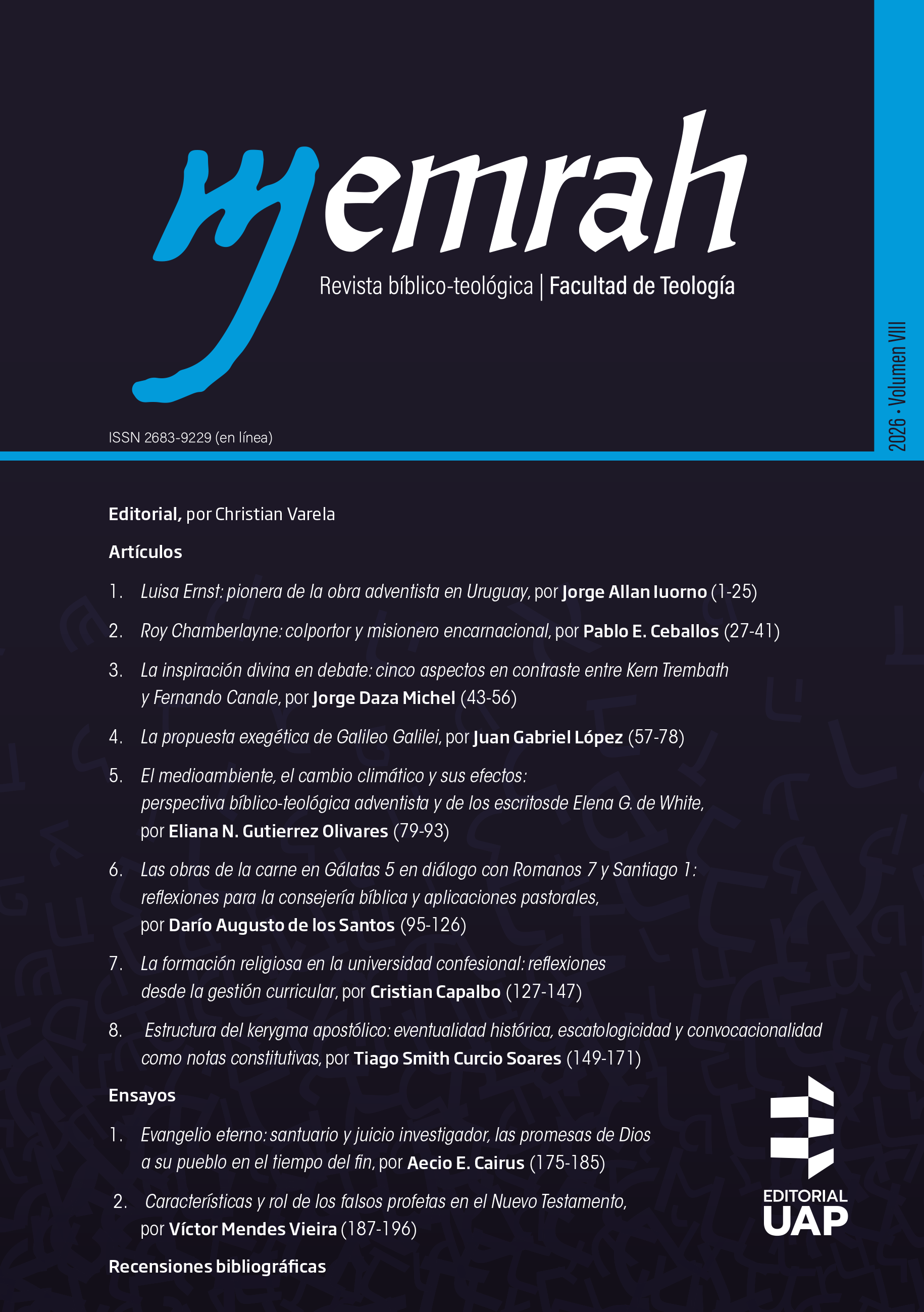
Religious Education at the Confessional University: Reflections from a Curricular Management Perspective
DOI:
https://doi.org/10.56487/rg0g2v96Keywords:
Religious education — Confessional university — Curriculum management — Curriculum — Didactic transposition — Epistemological vigilanceAbstract
Religious education constitutes an essential component of the identity and mission of confessional universities. However, contemporary cultural challenges including
secularization, religious pluralism, and the identity fragmentation characteristic of liquid modernity, require a reexamination of the strategies through which these
institutions promote spiritual development and the construction of a worldview consistent with their foundational principles. This article reflects on the role of
curriculum management as a strategic tool for strengthening religious education in confessional higher education. Drawing on a review of the literature on religious education, Christian educational philosophy, and curriculum theory, as well as recent empirical research, the study analyzes the relationship between institutional identity, curriculum, and holistic formation. It also examines the contribution of Chevallard’s theory of didactic transposition to understanding the transformation of theological knowledge into meaningful learning experiences. Also, the article proposes five levels of epistemological vigilance applicable to the curriculum management of religious education: vigilance over content selection, simplification, language, sequencing, and institutional identity. The article concludes that intentional curriculum management, structured around these levels of vigilance, constitutes a strategic element in fostering religious formation aligned with the mission of the confessional university.
Downloads
Downloads
Published
Issue
Section
License
Copyright (c) 2026 Cristian Capalbo

This work is licensed under a Creative Commons Attribution-NonCommercial-ShareAlike 4.0 International License.